In conversation with Sally Mann
Sally Mann: W. G. Sebald was talking about a picture of a young boy, and he said that the great tragedy of photography was that the young boy had no idea what life held for him. The inevitable tragedies and sadnesses. It reminded me of that scene recounted by Herodotus where Xerxes was gazing down at this sea of men, his troops before him, headed to battle, and he started to cry. It’s the exact same thing. You realize that’s what photography does so well: it is an elegiac art. It’s a memento mori—always filled with pathos.
Edmund de Waal: I love that. We have to talk elegy. And it’s interesting how central Sebald is to so many of us.
SM: Honestly, he isn’t so central to me, I’m not that fluent in his work, but that quote stuck with me, especially in light of Sebald’s own ignorance of what was to imminently befall him—just like the boy.
EDW: So many places to start. Do you know that wonderful remark of Walter Benjamin’s when he said: “I came into the world under the sign of Saturn—the star of the slowest revolution, the planet of detours and delays”? I kept thinking about our own work as being an art of detours and delays. I thought that was beautiful: the endless postponement of things. [laughs]
SM: I was wondering if that’s what you were talking about—it has taken us a rather long time to get here. [laughs].
EDW: Not just this show, but the temporal thing. We are endlessly moving around subjects and returning to them, and then iteratively starting again on them. I was so conscious that, in your studios a few months ago, I felt that they were full of beautiful, beautiful detours.
SM: But they’re always circling around the same impediment [laughs]. It’s just like Elizabeth Strout says: we all have one story to tell, we tell it a thousand different ways.
EDW: Perhaps one of the stories is the thing that you started off with, elegy, which is such a difficult place to begin any conversation. Or indeed end any conversation.
SM: Your work always struck me as having a sort of... Maybe memorial isn’t quite the right word, but we’ll leave it at that: a memorial quality.
EDW: I’ll take memorial [laughs]. It’s interesting, with elegy, because people tend to push it back into the ancients, into the beginnings of poetry.
SM: Well, you think of it as spoken.
EDW: Yes, it’s spoken over, or sung over, so it has that feeling. But it seems to me that elegy is actually really difficult.
SM: What are the components, do you suppose? Grace?
EDW: Grace is interesting. Can you have an untidy, unfinished, sort of fissile elegy?
SM: You certainly can’t have facile elegy.
EDW: You can’t have facile elegy [laughs]. No, but grace is interesting. How can you have something which is really, really beautiful and affecting and deeply true to the person or the situation you’re being elegiac about, and it not become too perfect.
SM: Doesn’t it have to include a message from the past, in a way? Because it clearly isn’t speaking for the future if it’s an elegy, right? Doesn’t it by definition have to be an ending, a summation? Where’s Google [laughs]? Where’s our dictionary?
EDW: Isn’t it about holding something which really matters to you...
SM: Holding it in your heart.
EDW: In your heart, and making it completely alive again in the moment. Having it revivified, reinvigorated, reconnected.
SM: One of the first things that I wrote you was that we share this interest in materiality and alchemy, the way our materials are living, protean, sometimes capricious. Like clay, silver, and collodion—collodion especially is strange, with its little, almost human, frisson. It’s very finicky and transitory and, just like clay, I guess, it depends of the tension of the edges.
EDW: That process of the collodion, which I find fascinating, is profoundly about materiality and time and alchemy. You talk, somewhere in one of your essays, about screwing things up, about things going wrong, which seems to me absolutely the heart of alchemy. Not ultimately being able to control of process.
SM: Or, in your case, what you do so beautifully: you can mend it.
EDW: We can mend it. But ultimately, at the heart of it, there is some sort of metamorphosis, something which is not controllable.
SM: For both of us. It’s utterly mysterious to me, even now, my craft. Yours is, of course, completely mysterious as well.
EDW: Well, we have two opacities sitting next to each other. But there is something shared about being obsessional about that return to that moment of transformation, in the darkroom and the kiln.
SM: Obsessional because we look for that moment of ecstasy, you know? And it can be... I mean, hell, I’ve been ecstatic over utter failure. And that’s a good thing, because there’s plenty of it [laughs].
EDW: How early did you put down the idea of the perfect image? It took me a long time to stop trying to make a perfect pot.
SM: How long? Do you mean decades or years?
EDW: About the first twenty-five years, I think. Just a couple of decades.
SM: Yeah, me too. I wanted the perfect print—and I still do. There are images that still require the perfect print, but there are images that just invite failure.
EDW: But they invite something at the edges, don’t they? They invite... What do they invite in? What’s the invitation that matters so much, which makes something so special? There are lots of ways of inviting failure in [laughs].
SM: I have an open door to failure [laughs].
EDW: But without making it an affectation: a genuine, day-by-day exploration. I mean, part of it is the strangeness of seeing something that feels both completely itself and completely unfinished in the same moment, which is very strange. You get that in some poetry as well, that feeling of something which is still happening.
SM: Sappho.
EDW: Sappho. And maybe that’s something that we share, that feeling of wanting to pause something, but to still feel the energy.
SM: To leave it unfinished and yet feel satisfaction. How do you know when a project is finished? That’s the most common question, but how do you?
EDW: Well, Auden says a poem is never finished, it’s only abandoned. And abandonment is really important. You have to make space for the next body of work. You have to simply let it go.
SM: Do you make a sharp break, or does it segue into the next? Does one lead inexorably to another or do you put it behind you and say, “Enough of this”?
EDW: I don’t know how it works. And the older I get, the less I know about how it works.
SM: For me there’s always the little siren song to create. Making and writing require the same degree of intensity and passion, but they are so different. Writing, it wears me out. It’s exhausting. Whereas taking a good picture can be in the moment so exhilarating and exciting. You can’t wait to see what the next one’s going to look like, and you can’t wait to get back in the studio. I can wait to get to the computer to write. It’s so hard to find the words. Although when you do, you do have that moment of epiphany and relief where you say, “Yeah, I’ve just written a great paragraph.” But different. Entirely different.
EDW: But you’re writing now?
SM: I’m about to [laughs]. You know how that is, don’t you?
EDW: “About to” is a wonderful space to inhabit [laughs].
SM: What was that great quote I had just read when I saw you in Virginia? This young guy turns to a veteran novelist and crows, “I’ve just written a book.” And the novelist turns wearily to him and says back, “I haven’t either” [laughs].
EDW: You know, having seen you at home, in the woods, with that turn of the river and the landscape, that particular landscape, and having spent some time with you in your studios, I got a very, very powerful sense of what place really means to you.
SM: Oh yes, it is crucial. And what does it mean to you?
EDW: Well, though I have no place that means so much to me, I think there are people who are completely deracinated and there are people who know what it’s like to love a place. And I think I’m in the latter—I know what it’s like to love a place. I suppose that you either have an impulse to dig or you don’t. So many of the journeys I’ve had have either been into bits of Europe on complicated family journeys, or into bits of the history of porcelain and the complexity of all that. But all those different places bring me back to an absolute imperative: to make something again or write something again.
SM: We claim our overlapping space, I think, our joint space, in this show. I’m so excited about this new work that you’re making.
EDW: What’s so interesting for me is that—it’s a decade, isn’t it, that it’s taken us?
SM: Damn near.
EDW: And that’s quite a lot of reading and looking and conversations together in complicated places, and quite a lot of challenge as well, which has been really extraordinary. It’s not straightforward. It’s very much a self-generated thing, this idea of being in a space together and showing work.
SM: Did I ever tell you how I hadn’t heard of you until Cy [Twombly] picked up your book—I remember exactly where I was standing in his house. He handed it to me, and he said, “You and this guy have a lot in common.” This guy. I read the book and said, “You know, that’s true, this guy and I, we do have a lot in common.” That was a good moment. It was one of those auspicious times where you remember exactly what the sun coming through the window looked like.
EDW: Well, I’m happy about that.
SM: He loved your work.
EDW: It’s funny, isn’t it? Because you and I did a conversation together at the Frick Collection in 2019. There was an audience, and it was the Frick, but in that hour together there was very much a sense that the world had completely disappeared. We were just thinking aloud and unpicking ideas and lines of thought. And you know, that’s sort of what’s going on in this show: unpicking different lines of thought.
SM: Teasing out strands of commonality.
EDW: Some strands weaving together and some completely passionate shared bits of poetry behind the whole thing. And there are these cadences between our work, which are really beautiful.
SM: Mixed metaphors, here. We’ve got cadences, we’ve got threads, we’ve got strands...
EDW: I know, it’s terrible. I mean, it needs editing, doesn’t it?
SM: Block that metaphor [laughs].
EDW: But there’s something absolutely at the heart: the elegy, the presence of memory within the work, which is completely unfashionable. It’s got nothing to do with any contemporary kind of stuff.
SM: I mean, memory has become sentiment.
EDW: It’s very hard. It’s hard, hard stuff. It’s about not letting things lie, I suppose.
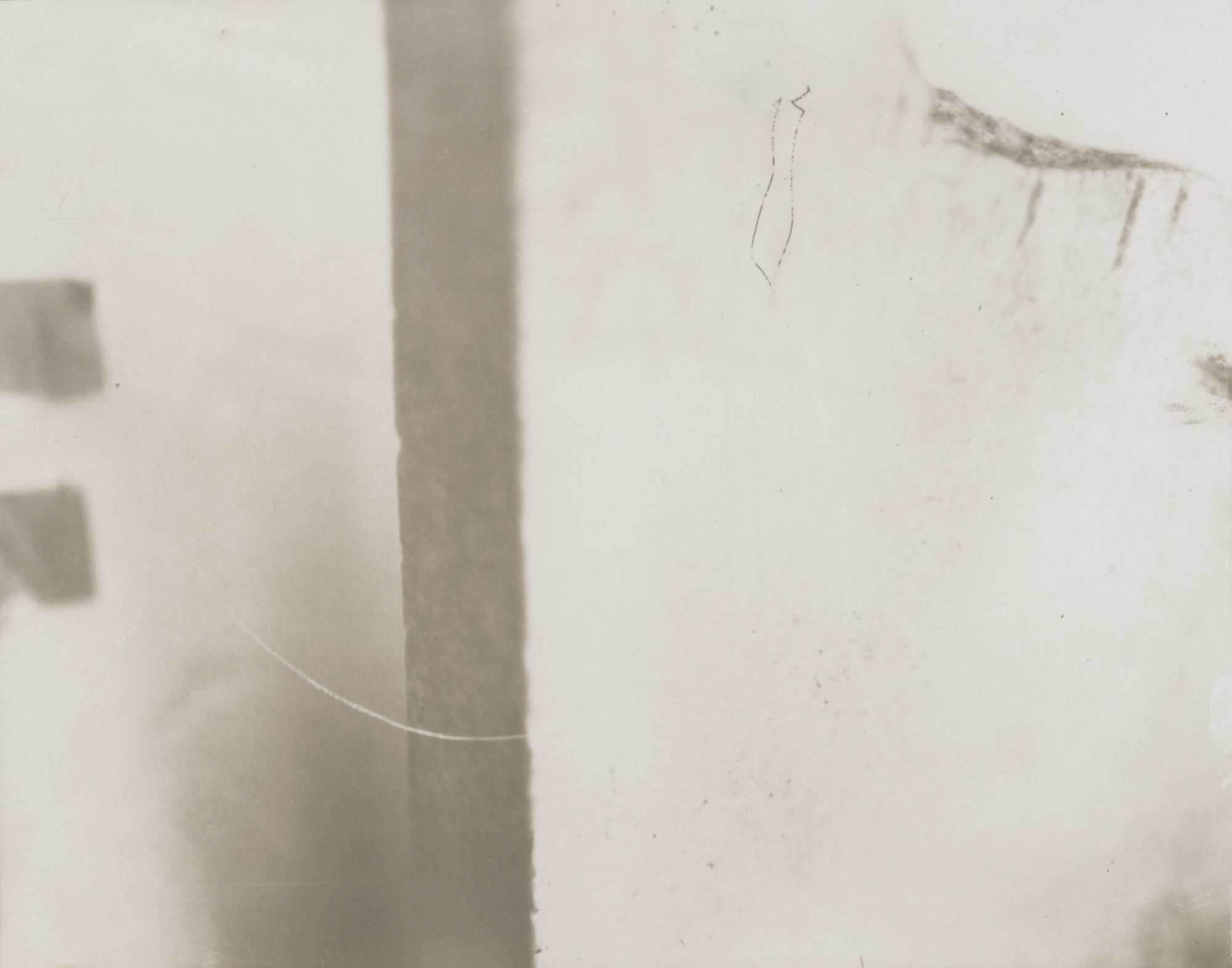
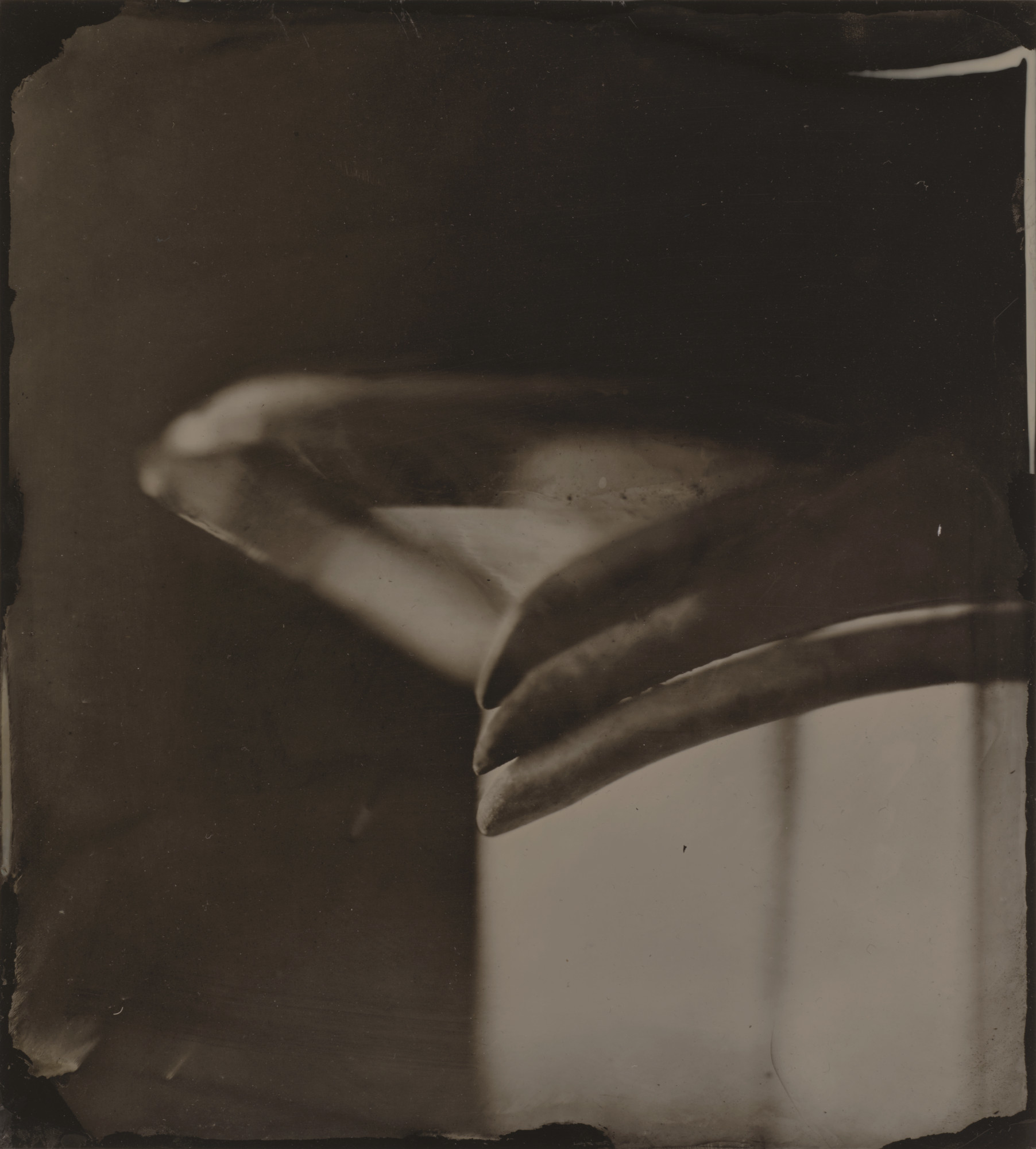
SM: I think we both share the belief that objects carry memories, and that’s been so important in the work that I’ve done responding to your work, and vice versa. These are things that have heft and weight, emotional weight. When I chose what to photograph in collodion for our collaboration, it was all nineteenth-century stuff that was hauled out of barns or sheds or old workshops. But it had all been used, it had been held or passed down by human hands for generations, like a plowshare or a forged piece of steel from a blacksmith shop. All those things have resonance. They have stories.
EDW: There was a moment when I came to see you in the fall, and we went up to the neighbouring farm where the owners had died, and the whole of the field around the house was filled with all their possessions, laid out. Every single agricultural implement was there, and the carpets and the household goods and the books and every single piece of crockery.
SM: And the Bibles.
EDW: And then another field was full of the cars of those who had come from all over to bid. And the guy standing on top of the truck...
SM: This great auctioneer.
EDW: The auctioneer, and several generations of a family’s life.
SM: More than several.
EDW: Many, many, many.
SM: Since the early 1800s.
EDW: I remember writing something in The Hare with Amber Eyes [2010] about this moment when all these family things that hold all of these memories become stuff. The moment of separation from a family and a place, into this sort of diaspora of objects. We saw people taking things away from the field, but there was still some sort of resonance left in these objects.
SM: Even within the dispersion of them. This is of course something you’ve explored in great detail in your work.
EDW: After seeing this extraordinary farm sale, we walk into your studio and there are all of these objects that over several decades you’ve been photographing again and again and again. It’s extraordinary because, of course, it’s not dispersion. It’s bringing them back together again in this powerful, alchemical moment.
SM: Right, exactly.
EDW: And that’s how I write books.
SM: Melding disparate things into one personal unit.
EDW: You couldn’t have choreographed that day more crazily, more perfectly.
SM: That day was so amazing [laughs]. I’m taking pictures in that house now because it’s just such a powerful place, haunted by—how coincidental—the souls of the local potter and his family.
EDW: How you talk about that, the presence of loss, how you talk about it as a real thing, not just as a kind of aesthetic moment but as a real elegy, a real holding of the past and bringing it forward into the present, seems to me very much at the heart of what you do. But, actually, I really wanted to ask you about titling, about your titles.
SM: Yeah?
EDW: There aren’t any. “Platinum.” “Tintype.” There’s a lot of “Untitled” here.
SM: Do you title yours? Everything?
EDW: I do, and I was wondering whether the untitled-ness was actually, really... I was rather jealous [laughs]. I thought maybe it was a way of holding all of those different things without making it too specific.
SM: Yeah, maybe, but I don’t think so. I think it’s just laziness [laughs]. It’s hard to title things. I once went through “The Love Song of J. Alfred Prufrock” [1915] and titled one of my shows using, basically, every other line. It’s terrible [laughs]. “Eat a peach?” “Roll my trousers.”
EDW: I’ll have that. I’ll have the other lines [laughs].
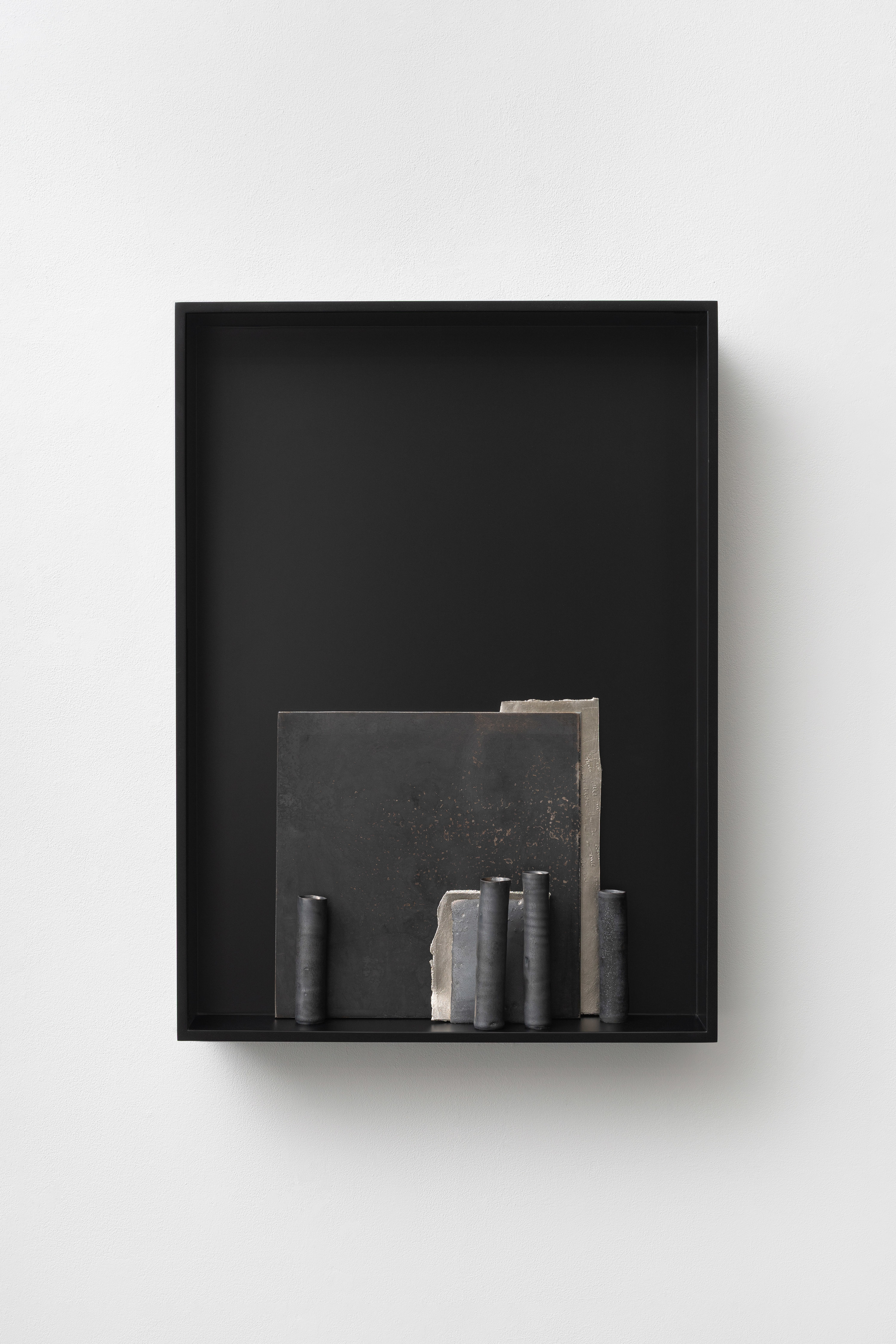
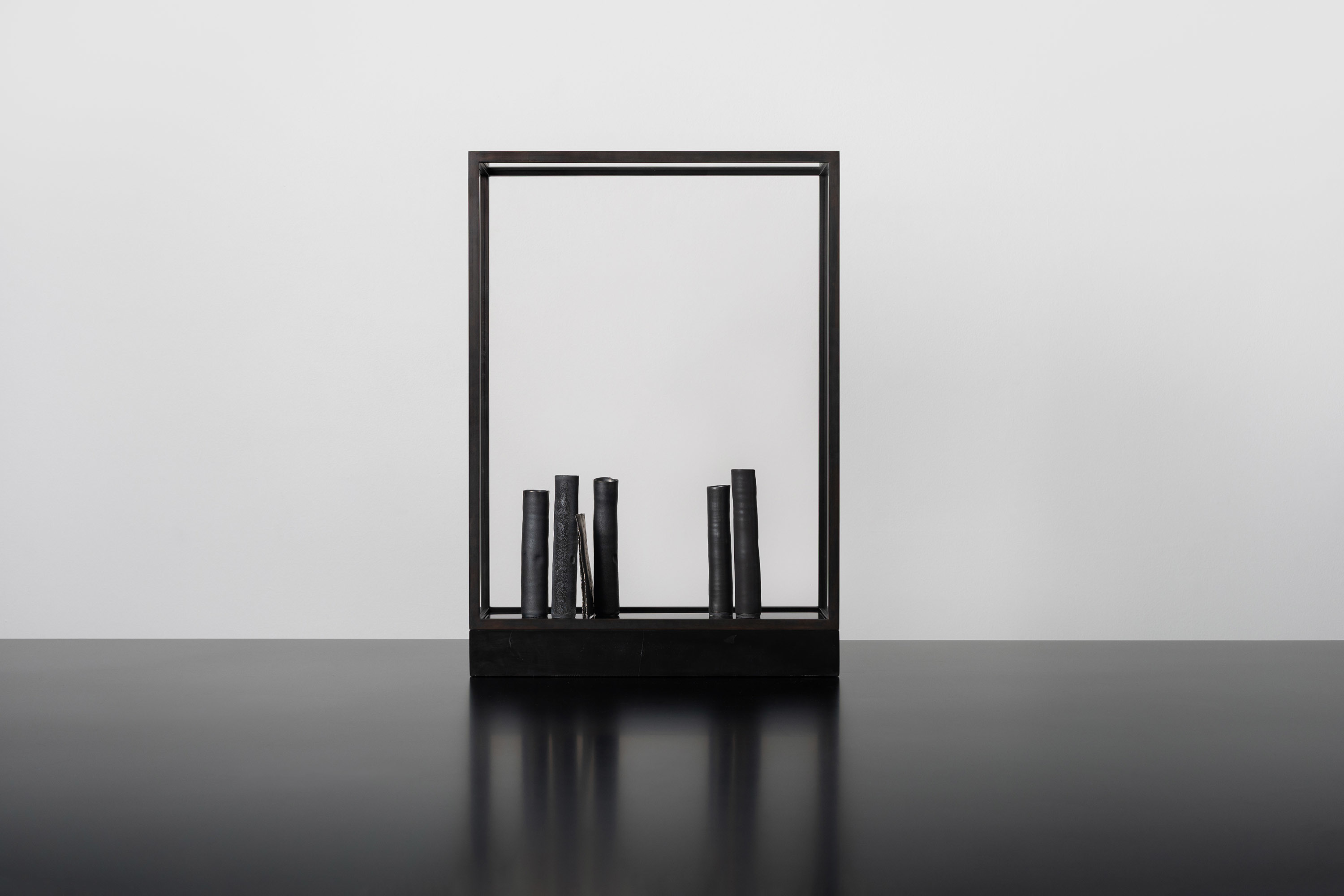
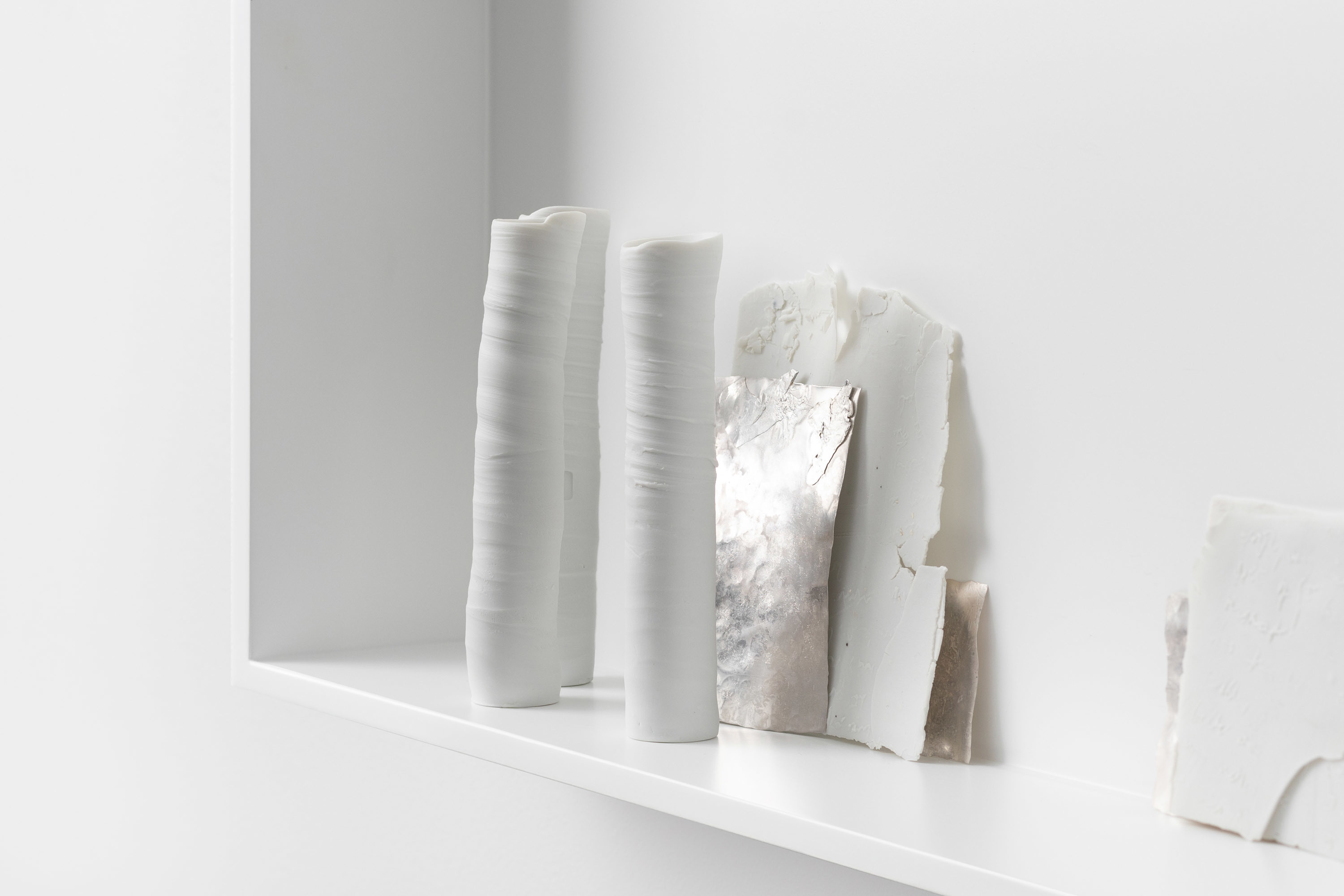
SM: In your work, particularly, the interstices become as important as the objects. It’s really extraordinary. And you’re just talking millimetres. Slivers of light, slivers of adjustment that you make. And with the merest shading of tonality. I’m shooting in colour now, and it’s so easy. You can’t go wrong.
EDW: I get it the whole time, people saying, “You know, when are you going to use colour?” It’s like, what do you think I’m using? What the hell do you think I’m doing there? I think I’m a Fauve.
SM: A garish Fauvist.
EDW: Radical colour all the time.
SM: Radical white, radical black. When I made the decision to do the tombstones, the platinum prints, I had to decide exactly how to use the platinum and what tones to use. I mean, it took about a nanosecond, actually. It wasn’t that hard. It was staring me in the face that they needed to be really pale. They’re memorial, obviously, not funereal.
EDW: That’s an important distinction.
SM: Yeah, I think so. When I went around to the marble yards and went around picking up scraps, they said, “You’re not shopping for a tombstone?” No, I am not.
EDW: That thing about it not being funereal. I think that’s a really beautiful and important line there.
SM: Yeah, and it also ties us back to Cy, because as you’ve written somewhere, he was a man who loved fragments, who loved shards, and part of his life in Italy was walking through fields and picking up shards. I think it definitely influenced the white sculptures that he did.
EDW: With Cy’s use of fragments of poetry, it’s both remembered poetry or inscribed poetry. It’s also erased poetry. There’s a wonderful thing he did, where he took a poem and cut it in half. There’s a bit of Cavafy or Seferis or something, and he just took a pen and crossed out the words he didn’t want.
SM: Well, you smear, as well. In your art, in the cold mountain clay works, you would smear certain words.
EDW: But that seems to me, that it’s the hand and poetry coming together. Like you said, it’s the dyer’s hand. It’s the hand coming up out of the vat and leaving finger marks actually on the object. And when you’re doing that with memory, bits of poems . . . I was trying to remember this bit of poetry all day and all I had was a fragment of it.
SM: Give me the fragment.
EDW: It’s “stubborn words.”
SM: What’s it from?
EDW: It’s actually Wallace Stevens. I found it. But it’s that fragment. That bit of the poem means so much more to me than the whole poem. It’s that fragment, that cracked bit of text. And that seems so true to what you’re doing. It seems to me that when I look at your tintypes and your new work, I’m seeing that moment of poiesis happening?
SM: “What thou lovest well remains.”
EDW: Yes. Yes.
SM: “The rest is dross.” All you needed were stubborn words.
EDW: It’s actually “flawed words and stubborn sounds.” Even better.